
Discover Wazuka, six ways
Six ways into Wazuka.





Eat CAFE
Set meals, a daily lunch, iced green tea and matcha sweets. Take your time over the taste of Wazuka at wazukanoSATO Cafe.
See the menuGallery GALLERY
The fan-shaped tea fields of Ishitera, and Wazuka's scenery through every season, in our photo gallery. Drone photos and video too. Drone footage from six areas, including Ishitera, Harayama, Shirasu and Kamatsuka, and photographs from thirteen places.
View the gallery
Participate PARTICIPATE
Bring your vegetables, tea, home-made goods or handicrafts to our shelves. We're looking for producers from the town, to sell what the town itself grows and makes.
About becoming a vendor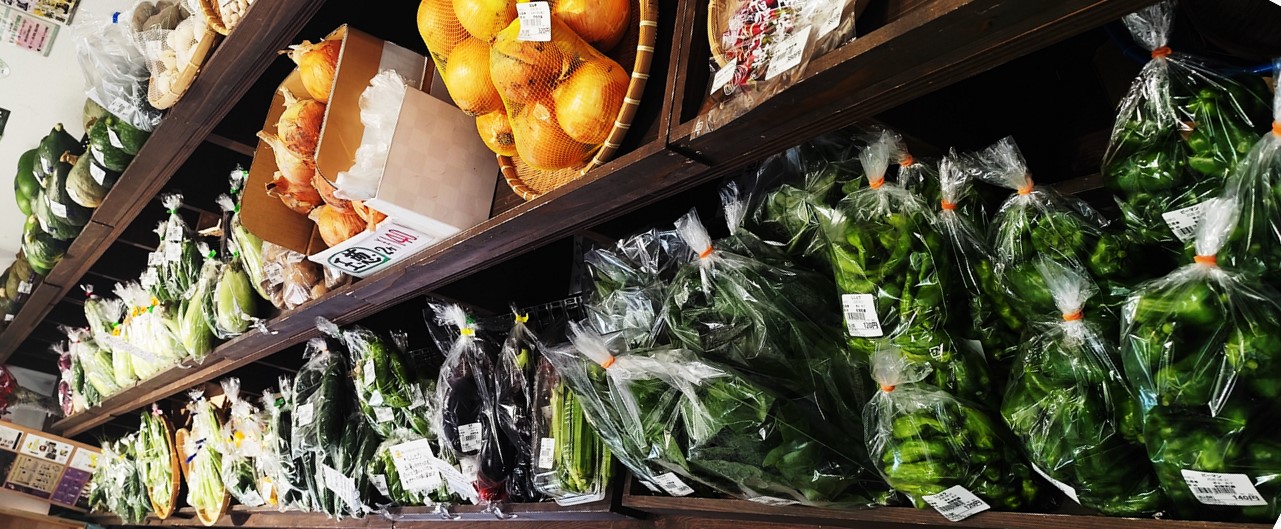
Shop SHOPPING
Morning-fresh vegetables, and Wazuka tea grown by local farmers — new-crop tea, roasted hojicha, matcha and home-made goods you'll only find in a tea town.
Visit the farm shopAround AROUND
The tea terraces of Ishitera and the pleasures of walking Wazuka. We share how to explore the town, together with the official tourism guides.
Explore the townMedia PRESS
A reference room on the history of Wazuka tea and the town, and our window for interview and filming requests. It gathers the published sources cited by our pages on the sights around Wazuka and on the town's awards and designations (in Japanese).
Reference room and press
While those pages are being prepared → Photos of Wazuka / About Wazuka tea / Japan Heritage: A Historical Walk through 800 Years of Japanese Tea / Cafe menu
Two minutes on foot to the Man'yoshu poem monument in Ikujigaoka Park, eleven to Shohoji Temple, eighteen to the Miroku Magaibutsu. Wazuka no Sato stands right in the middle of this tea town.
About Wazuka no Sato
Where a town shares what it grows.
Wazuka no Sato Station is a farm shop and cafe run by the people of Wazuka (operated by the Wazuka no Sato Council). The shelves centre on vegetables grown in this town and tea from this valley, alongside produce from neighbouring areas and everyday essentials.
At the adjoining wazukanoSATO Cafe we serve home-style cooking made by the town's own cooks. Nothing fancy — just the warm, everyday food you'll want to come back for.
Come and take a breath at the foot of the tea fields, whether you're passing through on a journey or dropping by as a local. We hope to be a meeting place that connects Wazuka with its visitors, and people with one another. The neighbouring Ikujigaoka Park, a two-minute, mostly level walk away, has a well-kept lawn — families with small children can let them play before or after the cafe.
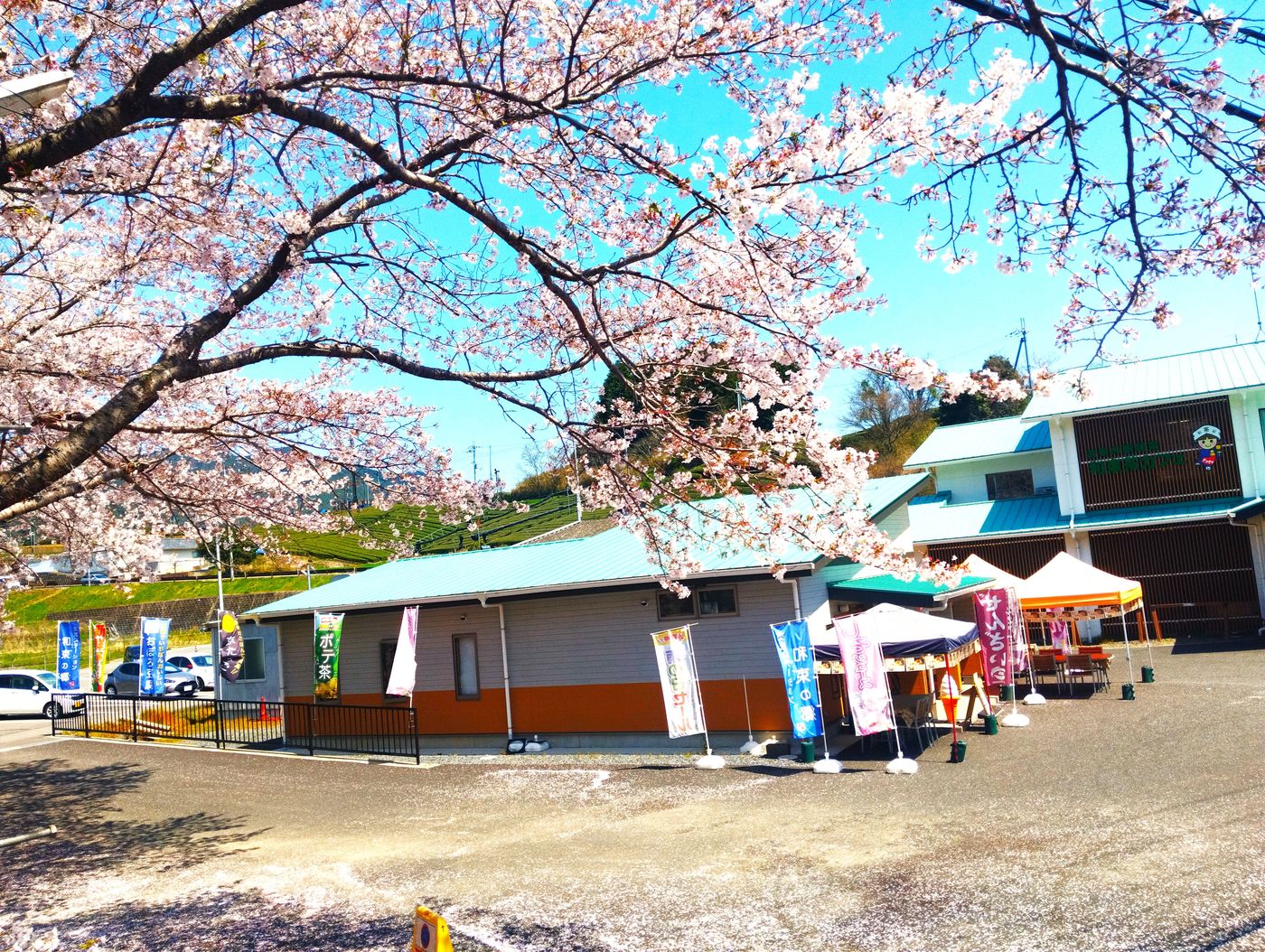
Wazuka no Sato Station seen through cherry blossoms in full bloom. The building in front houses the farm shop and cafe, and behind it - just visible through the blossom - is the tomb of Prince Asaka. To the right is the wazukanoSATO Cafe sign with the mascot Chacha-chan. Tea fields rise on the slope behind, glimpsed through the branches too - a view only spring offers, with cherry blossom and tea fields together.
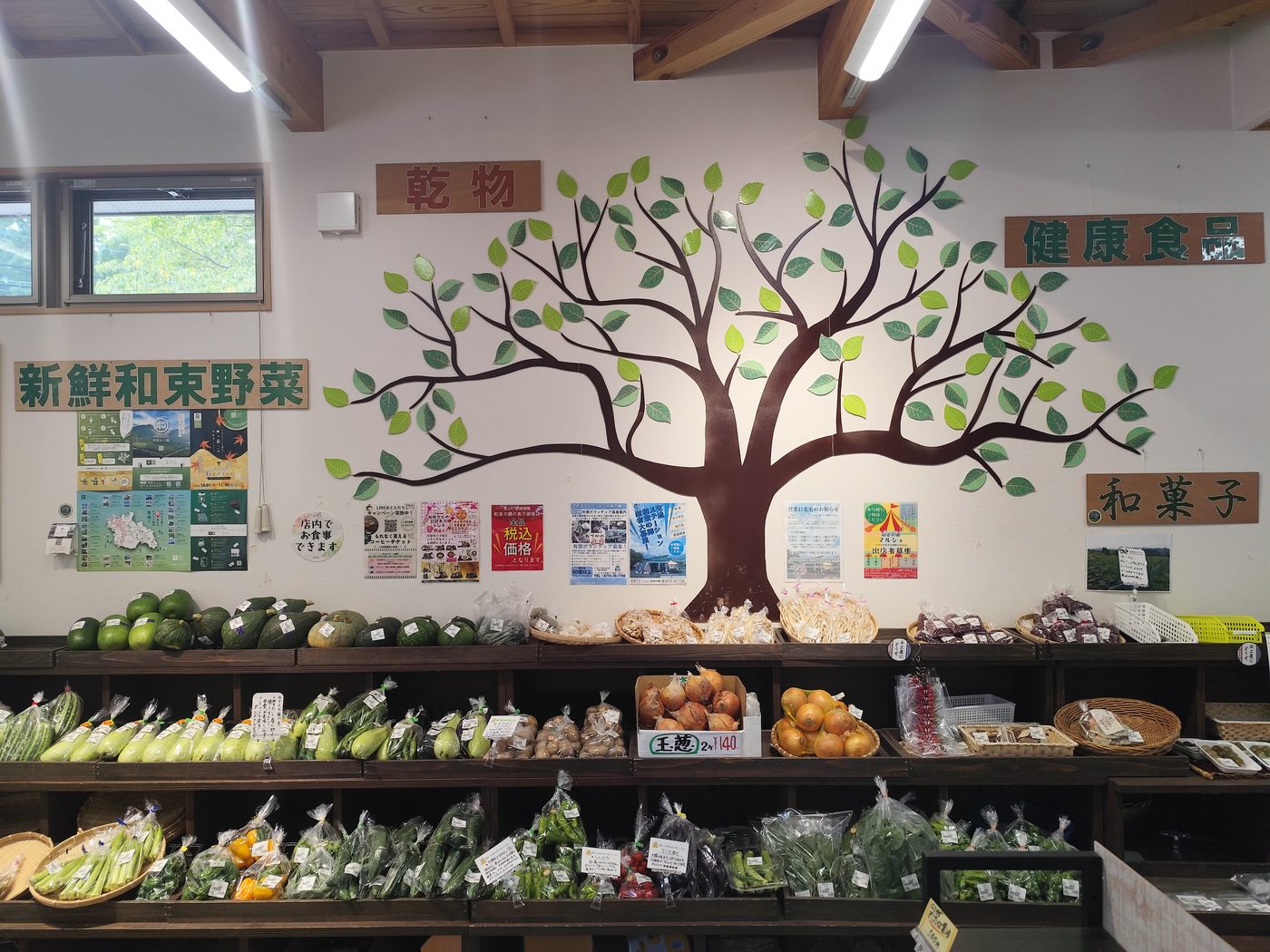
Every morning, growers arrive with vegetables picked that same day. What reaches the shelves is the face of the season — and of that morning's field. The growers set the prices themselves, so a price here carries the work and the feeling of the person who grew it. Pick up a bag, and there is a face behind it.
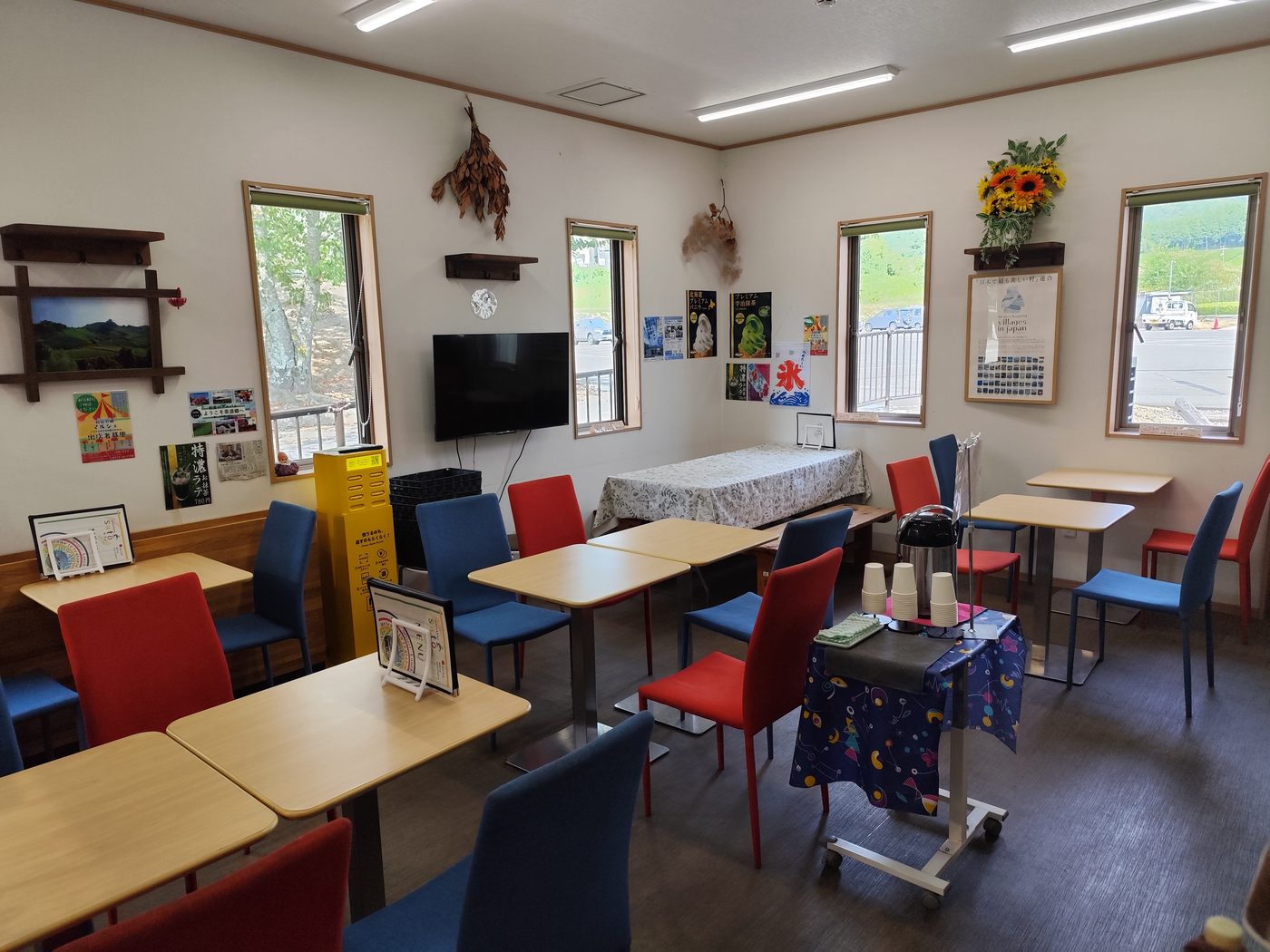
The seating area of wazukanoSATO Cafe next door. Large windows on all four sides look out on the green of Wazuka, and soft daylight fills the room through the day. Wooden tables with red and blue chairs — unpretentious and easy. On the wall, photographs of Wazuka’s tea fields and the certificate from the union “The Most Beautiful Villages in Japan”; on the shelves, flowers of the season. Whatever we recommend at the time — matcha soft serve, matcha latte, shaved ice in summer — is posted on the wall too.
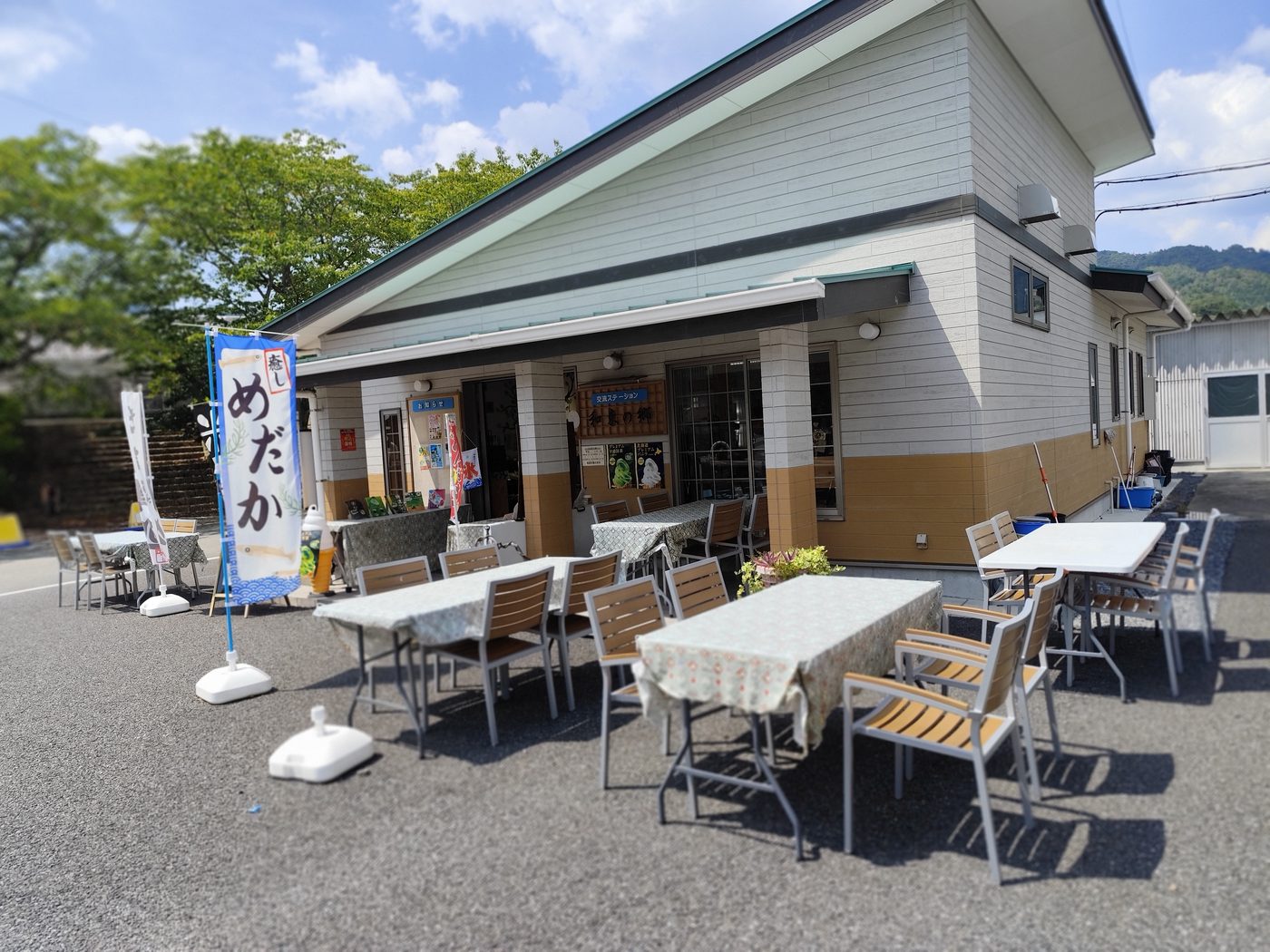
Wazuka no Sato seen from the front. Tables and chairs are set out under the eaves and outdoors as terrace seating. On a fine day, take a break here with a cup of tea in the clear air. The sign at the entrance reads Wazuka no Sato Station; under the eaves are the notice board and the banners of the season.
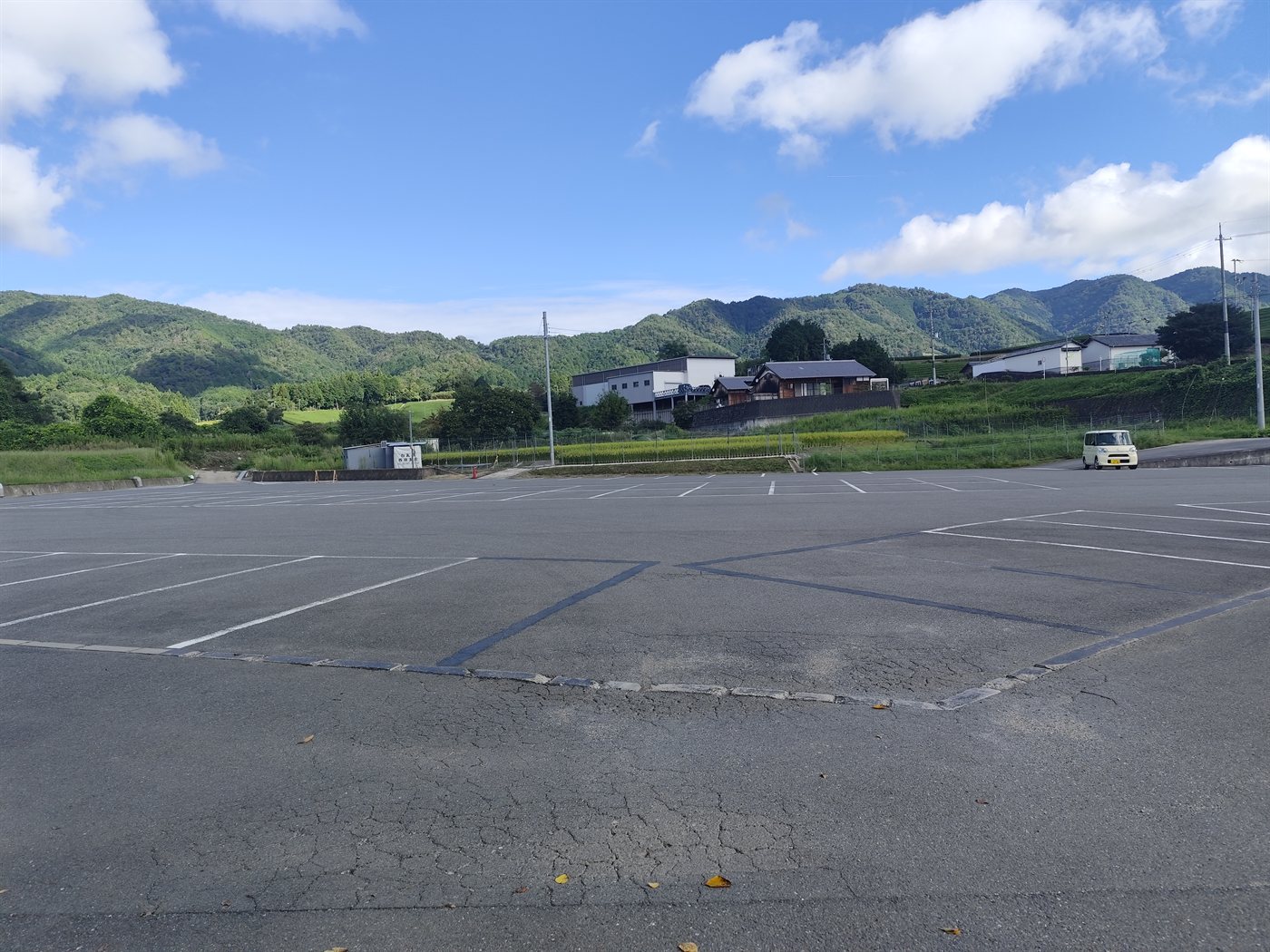
Behind Wazuka no Sato: the Green Tea Wazuka car park (80 cars; large coaches welcome). Rice fields spread around it, tea fields climb the slope beyond, and the mountains of Wazuka rise behind them. From the moment you step out of the car, you are already looking at Chagenkyo (rendered “Tea Utopia” in the town's own English). It is also a fine place from which to look across to the Tomb of Prince Asaka.
🌱 Would you like to join us at Wazuka no Sato? We are looking for producers and vendors. People from outside the town are welcome too. Take part →
Wazuka now — autumn 2026 (October)
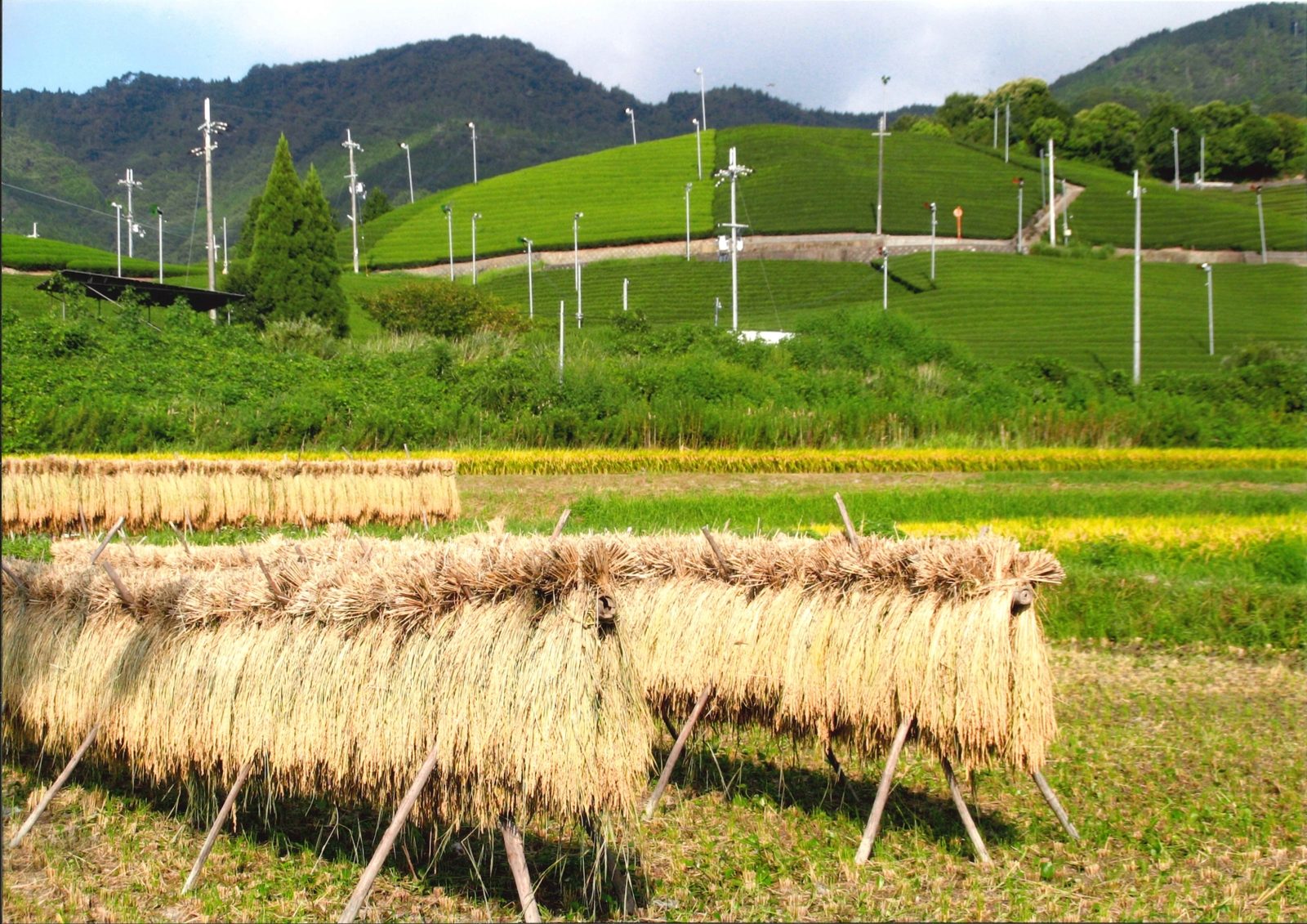
Rice drying on racks at Shirasu
Cut rice hangs on wooden racks to dry in Shirasu, while on the slope behind, the tea fields stay green. In Wazuka the rice comes in early, because the autumn bancha harvest begins in October, and small white tea flowers start to open in the fields.
On the second Saturday and Sunday of October (10–11 October in 2026), Wazuka Tenmangu Shrine holds its autumn festival, praying for the year's harvest.
The tea fields are private land. Please do not enter them without permission.

This week in Wazuka
For what is in season and annual events, see “Wazuka through the year”. The seasonal bus timetable and operating periods are on the Access page, and news from Wazuka no Sato is on the News page.
Access & Opening Hours
| Name | Wazuka no Sato Station (dining area: wazukanoSATO Cafe) |
|---|---|
| Address | 35 Ohazama, Shirasu, Wazuka-cho, Soraku-gun, Kyoto 619-1222, JAPAN |
| Phone | +81 774-39-7790 (0774-39-7790 in Japan) |
| Hours | Weekdays 10:00–15:00 Sat, Sun & public holidays 10:00–16:00 |
| Closed | Mondays & Tuesdays (Tue & Wed when Monday is a public holiday; Mon & Wed when Tuesday is a public holiday) |
| Parking | 80 cars / large tour buses welcome (Green Tea Wazuka car park, behind Wazuka no Sato) |
ℹ️ Opening hours and closing days may change. Please call ahead to confirm the latest information before you visit.
※ All prices shown include tax. Example: daily lunch from 900 yen (tax incl.).
Wazuka through the year: what to see when
| 10 January | Toka Ebisu at Wazuka Tenmangu Shrine (a Shinto rite held in the shrine grounds) |
|---|---|
| February | Plum blossom at Wazuka Tenmangu Shrine (from the town's flower calendar) |
| Late February to March | Hanana (rapeseed flowers, a local speciality) and plum blossom, as the tea fields get ready for spring's new tea |
| Early to mid-April | Cherry trees at Iwaibashi Bridge in bloom (Kyoto Prefecture Tourism Federation, in Japanese). In town the cherries usually open in turn along the Ishitera cherry avenue, the Seseragi Path at Nagai, then Iwaibashi |
| April | Weeping cherries, first in Ikujigaoka Park (Wazuka Sports Park), then at Saiganji in Yubune (from the town's flower calendar) |
| Mid-April to about October | Tea picking (timing and conditions depend on the host. Wazukaya (Wazuka House), a local-cuisine cooking school: about mid-April to October according to Wazukaya, or mid-April to about the end of October according to the Kyoto Prefecture Tourism Federation (in Japanese); reservation only. Wazuka Town Revitalisation Centre: May–June only, for groups of 10 or more as a rule, booking required (its private tour for individuals takes July and August off · tour page)) |
| Mid-April to May | Black shade covers (kanreisha) go over the fields grown for gyokuro and tencha (the leaf for matcha) to build up flavour; in the low fields in the centre of town they start to show from about mid-April |
| Late April to May | New-tea harvest (from late April in the early fields, busiest in May · About Wazuka tea) |
| June to July | Second-flush season. Towards the end of July the covers usually start to come off and the fields turn all green again |
| 7 July | Gion festival at Yasaka Shrine in Naka, held on this day every year and known locally as “Gion-san” |
| Summer | Shaved ice (summer only · menu) |
| Summer | River play at Yubune Forest Park, in a stream 10–20 cm deep (open weekends & holidays only; on weekdays in the summer holidays, only when booked) |
| From mid-September | Rice on the flat land turns gold against the deep green of the hillside tea fields. The rice is harvested early, because the autumn bancha harvest starts in October |
| October to November | Autumn bancha harvest, and small white tea flowers |
| Second Sat & Sun of October | Autumn festival at Wazuka Tenmangu Shrine, praying for a good harvest (10–11 October in 2026) |
| Early to late November | Autumn colours at Shohoji Temple (Kyoto Prefecture Tourism Federation, in Japanese) |
| November (2026) | Chagenkyo Matsuri tea festival (Sun 8 Nov, 10:30–18:00, in and around Wazuka Sports Park · Wazuka Town event announcement, in Japanese) |
| Winter mornings | Frost on the tea rows (photo); snow covers the fields two or three times a year |
| Winter | Matcha zenzai (recommended in winter · menu) |

Dates vary from year to year.
For a month-by-month guide to what is in season and what is on, see Wazuka through the year.
Slow down and stay a while in Chagenkyo.
We look forward to your visit. Group stops and press enquiries are welcome too — just get in touch.
TEL +81 774-39-7790
Weekdays 10:00–15:00 / Sat, Sun & public holidays 10:00–16:00 · Closed Mon & Tue (Tue & Wed when Monday is a public holiday; Mon & Wed when Tuesday is a public holiday)